
How Employers Can Partner for Neuroinclusive Care

How Employers Can Partner for Neuroinclusive Care: Practical Strategies to Support Neurodiversity in the Workplace
By Dr Charan Singh, Prismpath Health
In today’s diverse workforce, understanding and supporting neurodiversity is crucial for fostering an inclusive environment. Neuroinclusive care refers to the strategies and practices that employers can implement to support neurodivergent individuals, enhancing their workplace experience and productivity. This article will explore the significance of neuroinclusive care, practical strategies for employers, and the benefits of such initiatives for both employees and organizations. By addressing the unique needs of neurodivergent employees, companies can create a more supportive and productive workplace. We will delve into the definition of neurodiversity, the benefits of inclusive care, effective support programs, workplace accommodations, and methods for measuring the impact of these initiatives.
What Is Neuroinclusive Care and Why Does It Matter for Employers?
Neuroinclusive care is a framework that emphasizes the importance of recognizing and accommodating the diverse neurological profiles of employees. This approach is essential for promoting mental health and enhancing overall workplace productivity. By understanding neurodiversity, employers can create an environment that values different cognitive styles and perspectives, leading to improved employee satisfaction and retention.
Defining Neurodiversity and Its Impact on Workplace Mental Health
Neurodiversity refers to the natural variation in human brain function and behavior, encompassing conditions such as autism, ADHD, dyslexia, and more. Recognizing neurodiversity is vital for fostering an inclusive workplace, as it allows employers to understand the unique challenges faced by neurodivergent individuals. This understanding can lead to tailored support strategies that enhance mental health and overall job performance.
Indeed, many neurodivergent individuals face significant hurdles in traditional work environments, often experiencing exclusion and discrimination.
Challenges for Neurodivergent Employees in Organizations
Neurodivergent individuals in particular have not been sufficiently welcomed in organizations, partially explaining their reluctance to disclose their identity along with feeling excluded. Despite researchers framing the characteristics displayed by neurodiverse talent as natural variations found at the tail ends of the bell curve, many people are incapable of viewing them as such. Discrimination and stereotyping have thus resulted, further dampening neurodivergent employees’ work experiences.
Neurodivergent Employees: The impact of the disclosure decision and subsequent workplace accommodations, T Farquhar, 2024
Benefits of Neuroinclusive Care for Employee Wellbeing and Productivity
Implementing neuroinclusive care can yield significant benefits for both employees and employers. Research indicates that organizations that prioritize neurodiversity experience higher levels of employee engagement and productivity. Additionally, neuroinclusive practices can reduce turnover rates and improve workplace morale.
These benefits highlight the importance of neuroinclusive care in creating a thriving workplace.
How Can Employers Collaborate to Design Effective Employee Support Programs?

Collaboration among employers, employees, and mental health professionals is key to designing effective support programs for neurodivergent staff. By working together, organizations can develop comprehensive strategies that address the specific needs of their workforce.
Key Components of Mental Health Employee Programs for Neurodivergent Staff
Effective mental health programs for neurodivergent employees should include several key components:
- Individualized Support Plans: Tailored strategies that address the unique needs of each employee.
- Training for Management: Educating leaders on neurodiversity to foster understanding and support.
- Access to Resources: Providing information on mental health resources and support services.
These components ensure that neurodivergent employees receive the necessary support to thrive in their roles.
Examples of Inclusive Employer Initiatives and Partnership Models
Many organizations have successfully implemented inclusive initiatives that serve as models for others. For instance, some companies partner with neurodiversity organizations to create internship programs specifically designed for neurodivergent individuals. These partnerships not only provide valuable work experience but also help to raise awareness and understanding of neurodiversity within the workplace.
What Workplace Accommodations Promote Neurodiversity Support and Inclusion?
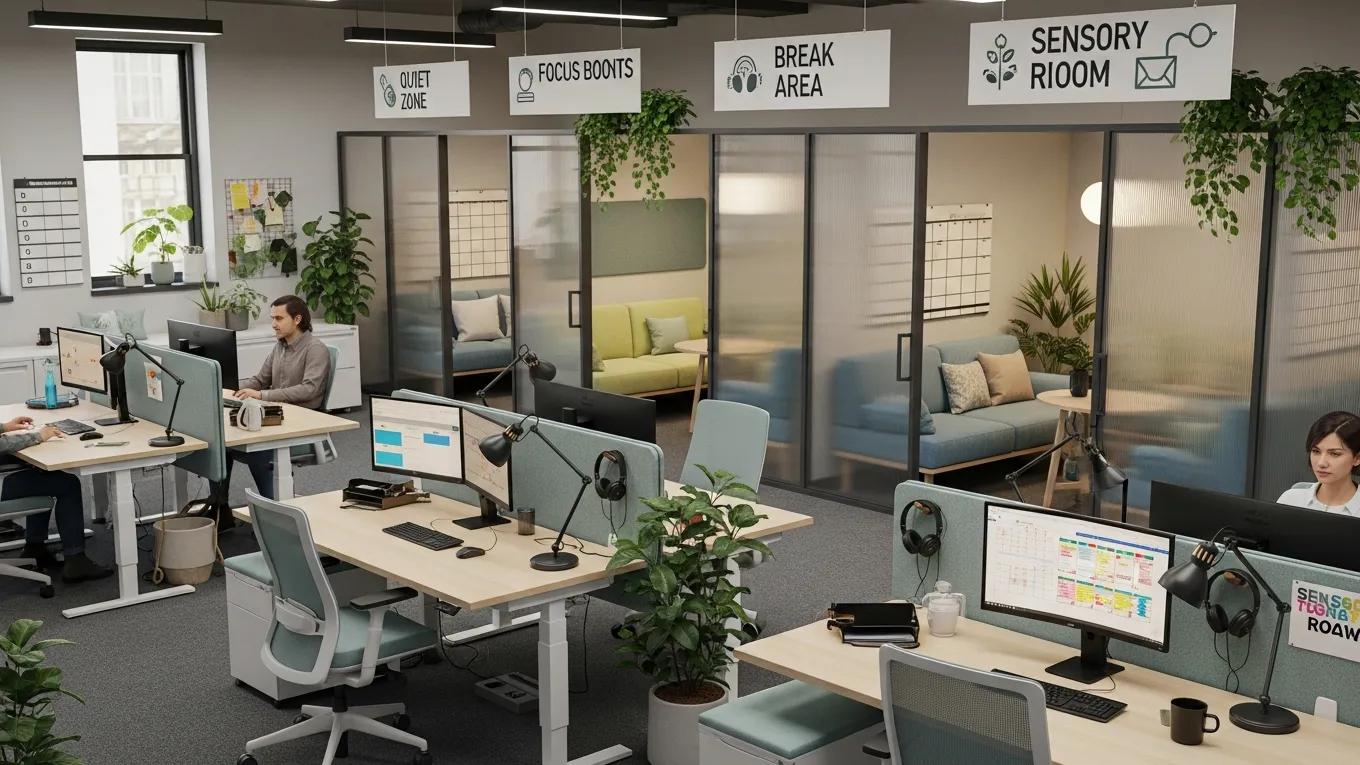
Workplace accommodations are essential for supporting neurodivergent employees and fostering an inclusive environment. These adjustments can significantly enhance employee performance and satisfaction.
Creating a truly neurodiversity-inclusive employment process requires a deep understanding and implementation of various accommodations throughout the employee lifecycle.
Neurodiversity Workplace Accommodations & Inclusive Structures
Knowing how to create a neurodiversity-inclusive employment process across the employee life cycle will be imperative, and accommodations will be an integral part of creating this more receptive and neurodiversity-navigable work setting. In this chapter, we lay out what accommodations are, what some of the common accommodations and workplace neurodiversity-inclusive considerations in the workplace are, how employers can create neurodiversity-inclusive organizational structures that will support and enhance inclusivity for others (Rivera inWorkplace neurodiversity rising. Self-published, 2022), and emerging accommodations brought to the forefront by the impact of the pandemic and the emergence of AI applications in the employment process, as well as how these accommodations considerations will play out across cultural and country-specific contexts.
Workplace accommodations and neurodiversity, SM Bruyère, 2024
Practical Strategies for Implementing Workplace Accommodations
Employers can implement various accommodations to support neurodivergent employees effectively:
- Flexible Work Hours: Allowing employees to work during their most productive hours.
- Quiet Workspaces: Providing noise-canceling options or quiet areas for focused work.
- Clear Communication: Using straightforward language and visual aids to enhance understanding.
These strategies can help create a more supportive work environment for neurodivergent individuals.
Effective communication strategies are particularly vital for fostering an inclusive workplace, ensuring clarity and minimizing stress for neurodivergent employees.
Neuroinclusive Workplace Communication Strategies
Moreover, existing programs designed for neuro diverse individuals may be adapted to support the growing neuro acquired population. Communication strategies, such as providing processing time and visual aids, can be useful in workplace settings. Additionally, offering group communication assistance and using plain language and visual signposts can help minimize stress and increase understanding. Providing clear agendas, specif
Utilizing Neurodiverse Workplace Strategies to Support the Growing Population of Long COVID Cases in a Neuroinclusive Workplace: A Paradigm Shift for …, J Hutson, 2023
Legal and Ethical Considerations in Supporting Neurodivergent Employees
Employers must also be aware of the legal and ethical implications of supporting neurodivergent employees. Compliance with the Americans with Disabilities Act (ADA) is crucial, as it mandates reasonable accommodations for individuals with disabilities. Additionally, fostering an inclusive culture is not only a legal obligation but also an ethical responsibility that benefits the entire organization.
How Can Employers Measure the Impact of Neuroinclusive Care Partnerships?
Measuring the effectiveness of neuroinclusive care partnerships is essential for continuous improvement. Employers can utilize various metrics to evaluate the success of their initiatives.
Metrics and KPIs for Evaluating Employee Mental Health Resources
Key performance indicators (KPIs) for assessing the impact of mental health resources include:
- Employee Satisfaction Surveys: Regular feedback from employees regarding their experiences and needs.
- Retention Rates: Monitoring turnover rates to gauge the effectiveness of support programs.
- Productivity Metrics: Analyzing performance data to identify improvements linked to neuroinclusive practices.
These metrics provide valuable insights into the effectiveness of neuroinclusive care initiatives.
Using Feedback and Case Studies to Improve Inclusive Employer Initiatives
Employers should actively seek feedback from neurodivergent employees to refine their support programs. Case studies showcasing successful initiatives can also serve as valuable learning tools for organizations looking to enhance their neuroinclusive practices. By continuously evaluating and adapting their strategies, employers can create a more inclusive and supportive workplace for all employees.